
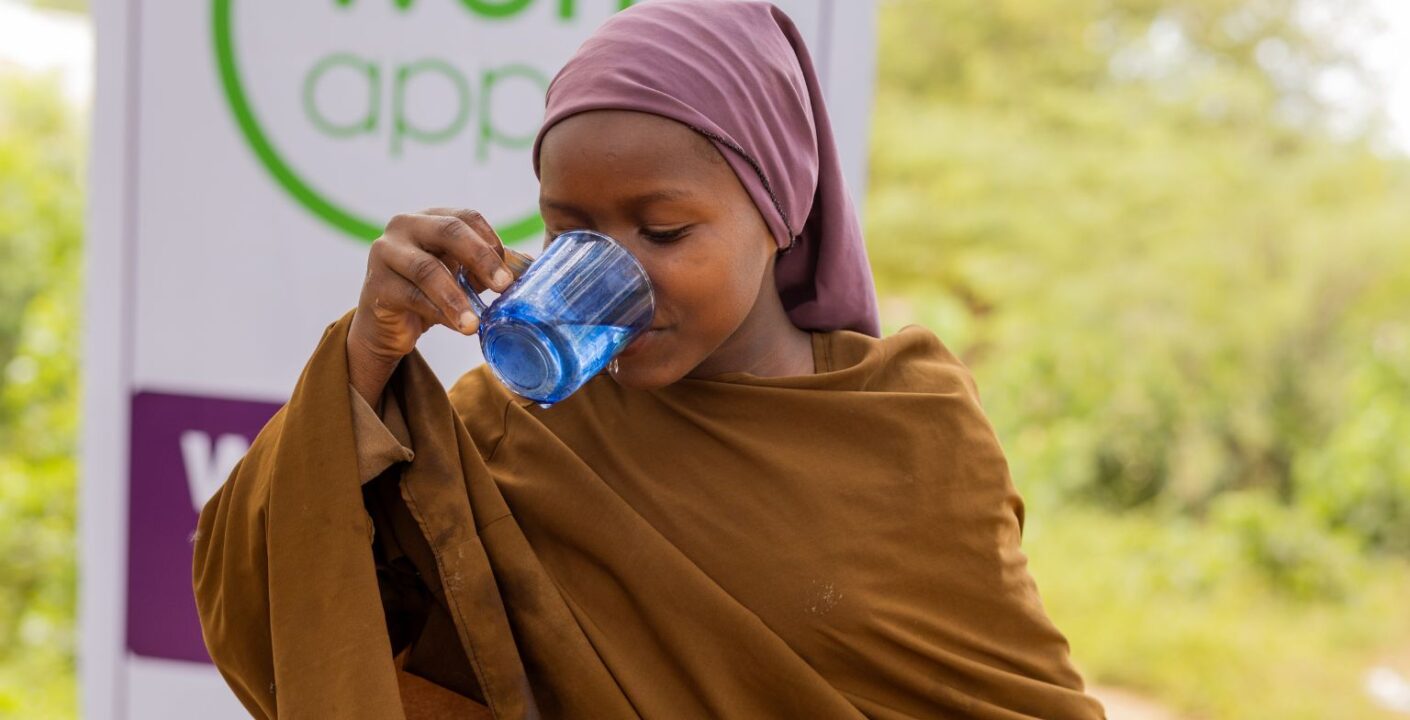
There is a moment that aid workers and development volunteers describe in strikingly similar terms — the day a new water pump is switched on in a village that has never had one. The gathered crowd, the cautious first touch of the handle, and then the rush of clean water into waiting hands. It is, by almost every measure, one of the most consequential moments a community can experience. What follows that moment changes nearly everything.
Health Improvements from Clean Water Access
Access to clean water in a remote village brings a marked reduction in waterborne diseases such as cholera, typhoid, and diarrhoea. These illnesses, often caused by contaminated water sources, pose significant health risks — particularly to children under five, who account for the vast majority of water-related deaths globally. When a child’s immune system is still developing, a single bout of severe diarrhoea can prove fatal within hours if medical care is not close at hand.
Clean water helps break the transmission cycle of pathogens, substantially lowering infection rates and improving overall public health. In communities where water was previously collected from open rivers, ponds, or unprotected wells shared with livestock, the shift to a protected borehole or treated supply can reduce diarrhoeal disease incidence by more than half. That figure is not abstract — it translates directly into children who survive infancy, mothers who do not lose newborns to preventable infections, and elders who are not repeatedly debilitated by illness.
Reliable clean water access also reduces the burden on local clinics, which in rural areas are often severely under-resourced. When fewer patients arrive with waterborne illness, the same limited staff and medicines can be directed toward other conditions — maternal health, respiratory illness, injuries — that might otherwise go untreated. For communities far from secondary care, this redistribution of healthcare capacity can be as important as the reduction in disease itself.
Beyond the immediate reduction in illness, clean water quietly reshapes the body’s long-term resilience. Chronic dehydration — common in communities rationing contaminated water — affects cognitive function, physical development in children, and the body’s ability to fight infection. When water is no longer scarce and no longer dangerous, a community’s collective health begins to strengthen in ways that take years to fully measure but are consistently observed by those who return to villages after a clean water project has been running for several years.
Time Reallocation and Daily Life Changes
Before clean water arrives, women and children typically spend several hours each day walking to and from distant water sources. In some regions, this journey can take three to five hours round-trip, often repeated daily and sometimes twice daily during dry seasons when nearby sources dry up entirely. The water carried is heavy — a standard jerrycan holds 20 litres and weighs as much as a large suitcase — and the physical toll of this daily labour accumulates over years.
The introduction of a nearby well or water pump transforms daily routines by freeing up these hours in ways that extend far beyond simple convenience. When the morning walk to the river disappears from a family’s day, the hours that replace it are not simply hours of rest. They become hours of possibility.
For women, this often means the first realistic opportunity to engage in income-generating activity — selling produce, participating in cooperative enterprises, or developing skills that the community itself needs. In villages where women’s economic participation has been structurally impossible simply due to the time demands of water collection, the arrival of a local water source has been documented to correlate with increases in household income, small business formation, and women’s participation in community decision-making. When a woman no longer spends half her productive day fetching water, her relationship to her own capacity changes.
The economic ripple effects are measurable. Research consistently finds that every dollar invested in clean water and sanitation returns several dollars in economic productivity — through reduced healthcare costs, increased working hours, and improved educational outcomes that raise future earning potential. For donor communities considering where development funding achieves the greatest leverage, water infrastructure ranks among the highest-return investments available.
Effects on Education and Childcare
With clean water readily accessible, school attendance notably increases — and the effect is most pronounced among girls. In many communities, it is girls who bear the primary responsibility for water collection, meaning that their school attendance has been not a matter of will or aspiration but of simple arithmetic: if the walk takes four hours, school is not possible. When the walk disappears, the classroom becomes available.
The knock-on effects of girls’ education are among the most well-documented outcomes in development economics. Educated girls are more likely to delay marriage, have fewer and healthier children, earn higher incomes, and reinvest those earnings in their own children’s education. A water pump that enables girls to attend school is, in this sense, an investment whose returns compound across generations.
For younger children, clean water changes the texture of daily life at home. Hygiene practices that were impossible without adequate water — handwashing before meals, cleaning food preparation surfaces, bathing regularly — become routine. These habits reduce the infection cycles that keep young children out of school even when they do attend, improving concentration, reducing absenteeism, and supporting the kind of consistent educational engagement that produces long-term outcomes.
Infant care is also profoundly affected. Mothers with access to clean water can prepare formula and weaning foods safely, reducing the risk of contamination at a stage of life when a child is most vulnerable. In communities where breastfeeding is complemented by early solid foods, the ability to prepare those foods with uncontaminated water has a direct bearing on infant survival and healthy development in the critical first two years of life.
Environmental Factors and the Water Source Itself
Clean water projects do not exist in isolation from the natural environment — and the most successful ones are designed with that relationship in mind. A borehole drilled without understanding the local aquifer can deplete groundwater reserves that an entire region depends on. A poorly sited well can draw from sources vulnerable to agricultural runoff or seasonal flooding. The quality of the environmental assessment that precedes a water project is often as important as the engineering itself.
When projects are done well, they work with local hydrology rather than against it. Protected springs are developed in ways that preserve the natural catchment area. Boreholes are cased and capped to prevent surface contamination from entering the water column. Rainwater harvesting systems, where appropriate, are designed to capture and store seasonal rainfall in ways that reduce dependence on groundwater during dry periods, easing pressure on the wider ecosystem.
There is also an often-overlooked environmental benefit that comes indirectly from clean water access: reduced deforestation. In communities where water must be boiled before it is safe to drink, firewood consumption is substantial. Every day, fuel is gathered and burned to make water safe — contributing to the steady loss of tree cover that affects soil stability, local rainfall patterns, and carbon storage. When a community gains access to genuinely clean water that does not require boiling, that daily demand for firewood disappears. Trees that would have been cut survive. Over time, across many communities, this effect is significant.
Community Maintenance and Sustainability
Sustainable access to clean water depends largely on a strong community ownership and maintenance model. This is perhaps the most critical and least visible element of any water project — because a pump that breaks down and is not repaired within weeks is, within months, simply an abandoned structure, and the community reverts to what it knew before.
Local committees are typically established to oversee the upkeep of wells and pumps, managing small fees or contributions for repairs and replacement parts. The financial model is deliberately modest — contributions are calibrated to what households can realistically sustain — but the principle it embodies is important: when a community pays something toward its water source, even a small amount, it develops a relationship of ownership rather than dependency. Members report faults. Leaders prioritise maintenance. The water point is protected rather than neglected.
Training villagers to maintain machinery builds practical technical capacity that extends beyond the pump itself. Mechanics who learn to service a hand pump develop skills transferable to other equipment. Record-keeping systems established for water management create administrative habits useful in other community contexts. The social infrastructure built around a water point — the committee, the contribution system, the shared decision-making — is a form of community institution that often outlasts the specific project that created it.
For donors considering how their contribution translates into lasting change, this is worth understanding clearly. A well that functions for twenty years and is maintained entirely by the community it serves is a fundamentally different outcome from a well that functions for three years before falling into disrepair. The most impactful programmes invest as much in community training and governance as they do in the physical infrastructure itself — because the hardware is only as durable as the human systems built around it.
Clean water is not a single intervention. It is the beginning of a cascade — of health, of time, of possibility — that a community then builds upon in ways that no project plan can fully anticipate or predict. For those considering supporting this work, it is worth knowing that few investments touch as many lives, in as many ways, for as long.