
Assessing the Need and Setting the Foundation
Building a school in a remote village begins long before construction starts. The initial assessment phase is crucial to identify the genuine need for educational facilities. This involves visiting the community, understanding local circumstances, and confirming that a school will significantly improve access to education. Selecting the right location follows, often requiring negotiation to secure suitable land that is accessible yet safe for children.
Equally important is engaging the community from the outset. Consultations with village elders, parents, and local leaders ensure their commitment and help gather local knowledge. This collaborative approach ensures the project responds to actual needs and gains the essential support for its success. The community is not merely a beneficiary but becomes an active partner, lending land, labour, and material support through a shared sense of responsibility.
Procuring Materials and Mobilising Construction in Remote Areas
Once the site and community partnership are agreed upon, the practical challenges of sourcing materials begin. Remote locations rarely have easy access to construction supplies—cement, roofing metal, or timber may all need to be brought from distant towns, involving complex logistics with limited transport infrastructure.
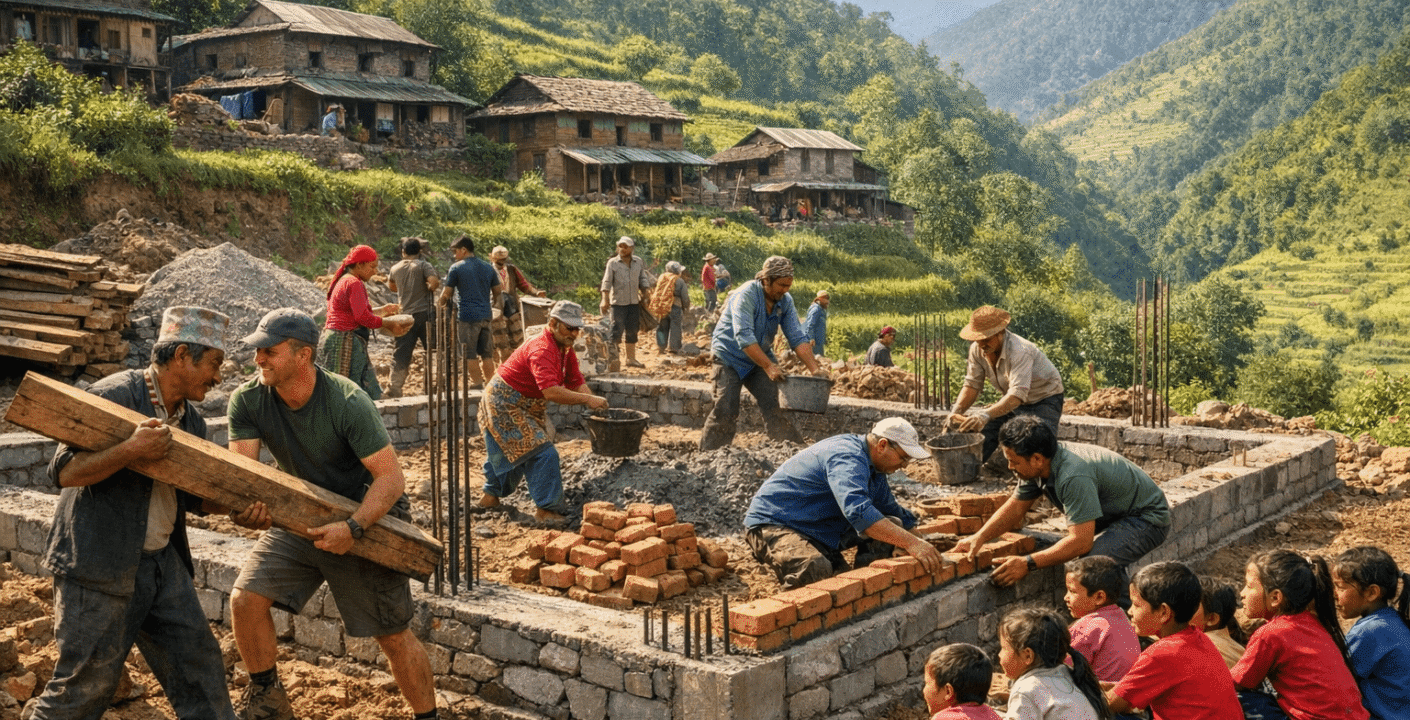
Meanwhile, the role of the local community remains vital. Many materials such as stones for foundations, bricks, sand, and water are typically sourced and gathered locally by villagers, easing the financial burden and fostering ownership. Coordinating construction teams is also intricate; skilled workers must be either trained locally or brought in carefully, with adequate accommodation and tools supplied in difficult conditions.
Construction Process and Equipping the School
The construction phase unfolds over 24 months and follows a clear progression of tasks. First, laying a stable foundation is essential in these sometimes rugged environments. Then, erecting the structural walls ensures a durable and safe building, often with multiple classrooms designed to suit the community size.
Roofing follows, typically using metal sheets resistant to local weather conditions, protecting students and staff. Inside, classrooms are furnished with desks, chairs, and blackboards. Finally, the school is equipped with necessary educational supplies—books, writing materials, and teaching aids—to facilitate effective learning from day one.
This phased approach is meticulous and allows time to adapt to weather challenges, availability of materials, and skill levels of construction teams. Every stage demands coordination between the charity, contractors, and the community to maintain progress and quality standards.
Sustainability, Reporting, and Funding Model
Ensuring the school’s long-term success relies heavily on the community’s continued involvement. After completion, local leaders and parents form committees to manage daily operations, maintenance, and sometimes funding of ongoing needs. This stewardship nurtures a sense of ownership that helps the school endure and thrive.
From the charity’s side, transparency and accountability are prioritised through quarterly reports to donors. These updates cover financial expenditure, construction progress, and community impact, offering clear evidence of how contributions are used.
The donation model is designed to be inclusive, allowing supporters to contribute in varying amounts—from £500 units that cover essential classrooms supplies to full blocks costing £10,000. This tiered approach encourages collective investment, reflecting the complex and costly nature of building a school in a remote setting.
Such projects cannot be seen as simple transactions; they represent a deep commitment involving numerous stages, challenges, and ongoing partnerships that together make education accessible for children in remote villages.