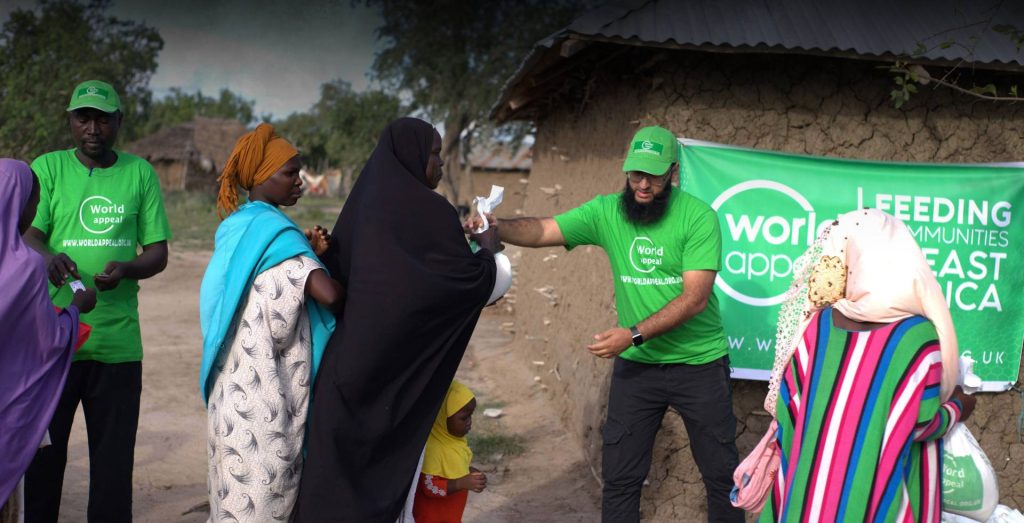
Our North West Kenya Food Parcel Distribution – October 2023
In October 2023, our team travelled deep into North West Kenya to deliver urgent food parcels to some of the region’s most vulnerable communities. What we witnessed there was a powerful reminder of why humanitarian work matters, and why consistent support can reshape futures in places where life is lived on the brink of survival.
This mission was not just a distribution exercise; it was a journey through resilience, hardship, and hope. It allowed us to sit with families, walk through dry riverbeds, listen to community elders, and witness first-hand the difficult realities faced by rural Kenyan households struggling with food insecurity. The stories we heard and the gratitude we saw continue to shape the way we plan our projects and how we think about sustainable, long-term change.
The Landscape of Need
North West Kenya is a region marked by immense beauty, stretches of savannah, acacia-dotted plains, and pastel sunsets that make the horizon glow. But beneath this natural beauty lies a harsh reality: prolonged droughts, failed crops, and limited access to income-sustaining opportunities.
By October 2023, many families were facing one of the toughest periods in recent history. In some villages, livestock had fallen drastically due to the lack of grazing land. In others, parents were skipping meals to ensure their children had at least a small portion to eat.
It was precisely in this climate of need that we felt compelled to act.
Planning the Distribution
Our team began planning weeks in advance, working closely with local community leaders to identify households in the most urgent need. After several meetings with village elders and coordinators, we finalised a distribution list that focused on widows, orphans, the elderly, and families living in severe poverty.
Each food parcel contained staple nutritional items such as maize flour, rice, beans, cooking oil, sugar and tea leaves, ingredients capable of sustaining families for several weeks.
The Journey Into the Villages
Reaching these communities meant travelling for hours over rough, dusty terrain. On the morning of the distribution, our team loaded the parcels onto a truck and two smaller vehicles and set out before sunrise.
When we finally reached the first village, children ran out to greet us with laughter and excitement. Elders waited patiently beneath the shade of trees. Despite the heat and long queues, the atmosphere was filled with dignity and gratitude.
Faces Behind the Statistics
In one village, we met a mother of four who had lost her husband earlier that year. She explained how she often went hungry so her children wouldn’t have to. The food parcel she received meant they would have stability through the most difficult weeks.
Another recipient was an elderly man living alone, too frail to farm or travel long distances. For him, the food parcel was more than assistance, it was a lifeline.
These stories reflected the stark reality: behind every statistic is a family fighting to survive.
Community Participation and Dignity
Local volunteers played a vital role. They helped organise queues, carried parcels for the elderly, and ensured that the most vulnerable were prioritised. This spirit of cooperation reminded us that humanitarian aid works best when it is rooted in partnership and respect.
A Discovery That Changed Everything: The Need for a School, Medical Centre & Safe Water
During our visit, it became clear that food insecurity was only one layer of a much deeper crisis. Conversations with elders, mothers, teachers, and youth highlighted three urgent needs that continue to shape the region’s future
1. A Secondary School
The nearest secondary school is miles away, far too distant for most children to walk safely. Many young people, especially girls, drop out after primary school because the journey is long, dangerous, and expensive.
Establishing a local secondary school would:
- Provide accessible education
- Reduce dropout rates
- Protect girls from early marriage
- Create pathways to employment and leadership
Education is not just a need, it is the key to breaking generational poverty.
2. A Medical Centre
Healthcare access is almost non-existent in many parts of North West Kenya. The community described heartbreaking situations where:
- Mothers are giving birth in a small 2 x 2 room, without trained medical support
- Minor illnesses quickly become life-threatening
- Snake bites, infections, and dehydration go untreated
- Emergency care is hours away on foot, often in dangerous heat
A basic medical centre could save countless lives and offer preventive healthcare, vaccination programmes, maternal support, and emergency treatment that is currently out of reach.
3. Access to Safe, Clean Water
Perhaps the most urgent need was safe drinking water. We saw families collecting water from muddy, stagnant pools shared with animals—a major cause of sickness, malnutrition, and disease.
Women and girls walk several kilometres daily to collect water, losing precious time they could spend in school or earning income.
A borehole or solar-powered water system would:
- Reduce disease
- Improve hygiene
- Support farming and food production
- Free up time for education and work
These discoveries shaped our long-term vision for the region. Our food distribution marked the beginning not the end of our commitment to help create sustainable, life-changing solutions.
Why Food Parcels Still Matter
Food support provides immediate relief, allowing families to regain stability while we work on long-term solutions such as education, healthcare, and water access.
Relief and development must go hand-in-hand.
Gratitude From the Ground
Throughout the distribution, the gratitude expressed by the communities was overwhelming. Elders prayed for us, mothers sang songs of thanks, and children danced around the trucks. These moments fuel our determination to continue supporting North West Kenya.
Looking Ahead
The October 2023 food parcel distribution reaffirmed our mission: to stand with vulnerable communities and create long-term change. But the need remains immense.
With your continued support, we can help build:
- A secondary school
- A medical centre
- A clean water system
- And expand future food and livelihood programmes
Your contribution today can change lives tomorrow