
Ramadan and Its Purpose: Fasting, Prayer and Spiritual Renewal
Ramadan is the ninth month of the Islamic lunar calendar and a time when Muslims increase acts of worship, self-reflection and community care. It marks the month in which the Qur’an was revealed and is observed through fasting from dawn to sunset, additional prayers and reading of scripture. The practice is both spiritual and social: it encourages individuals to direct attention inward while remaining connected to the needs of those around them. Source: BBC
For many, the purpose of Ramadan blends several aims. Fasting (sawm) trains restraint and attentiveness; prayer and recitation renew faith and meaning; acts of kindness and charity strengthen social bonds. The month provides a structured period in which daily routines are adjusted to prioritise contemplation, ethical behaviour and communal support. These adjustments can reveal where personal habits and community structures work well, and where they require care.
Fasting and Self-Discipline: Daily Practices that Change Habits
Fasting during Ramadan is more than abstaining from food and drink. It includes avoiding harmful speech and behaviour, improving punctuality for prayer and making conscious choices about time and attention. These daily practices form a rhythm: a pre-dawn meal (suhoor), a day of restraint, the evening meal to break the fast (iftar) and night prayers (tarawih) in many communities. The repetition and predictability of that rhythm help new habits to take root.
Self-discipline in Ramadan operates on several levels. Physically, people experience changes to appetite, sleep and energy. Practically, households reorganise meal planning and childcare. Psychologically, many report increased patience and clearer priorities. From a humanitarian perspective, these shifts are relevant: the skills gained—time management, empathy, restraint—are transferable to caring for family members, volunteering and participating in community projects.
Simple, repeatable practices support sustained change. For example:
- Setting daily goals for reading scripture or charitable acts, rather than vague ambitions.
- Planning meals and resources to reduce waste and ensure more people can benefit from shared food.
- Creating modest, realistic routines for night prayers and rest so that spiritual commitments do not exhaust physical capacity.
These practices help the month feel manageable and meaningful rather than overwhelming. Over time, small adaptations in daily life can lead to lasting habit change that continues after Ramadan ends.
Generosity and Community: Charity, Iftar and Shared Responsibility
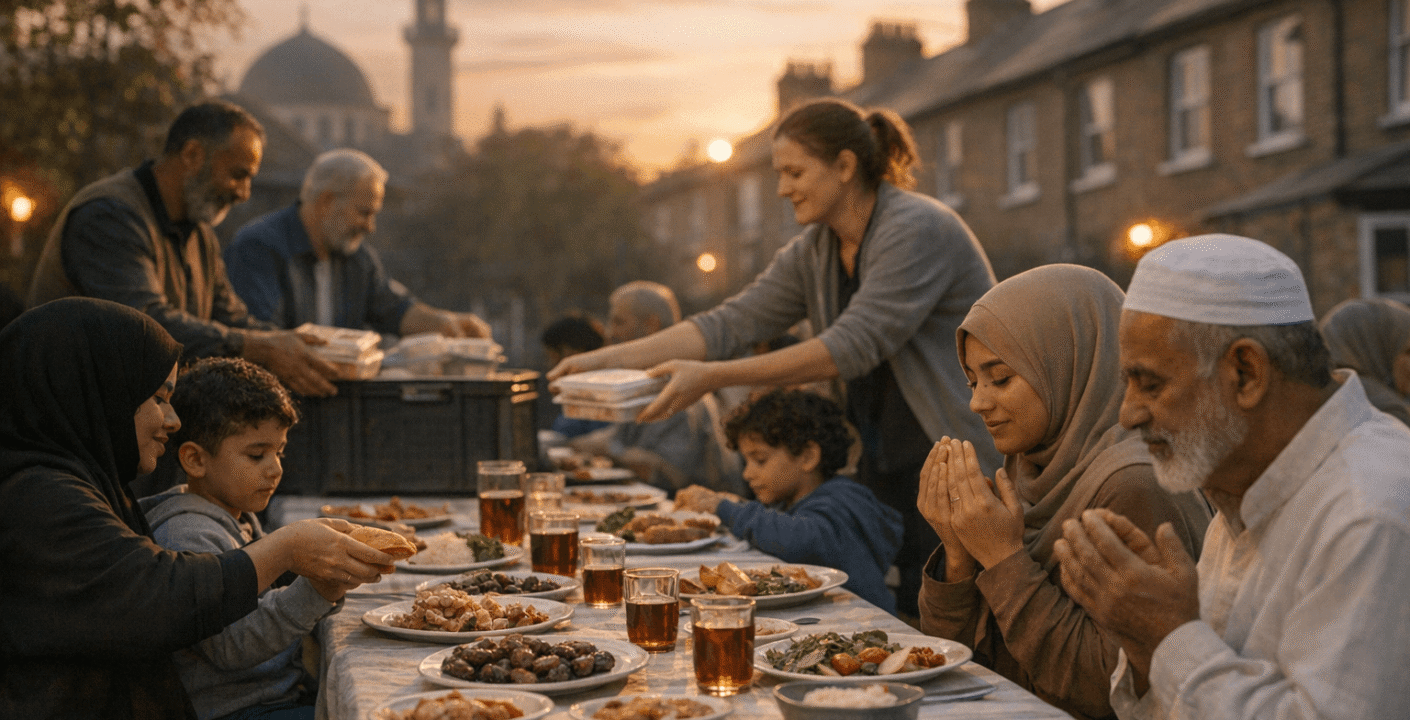
Generosity is central to Ramadan. Zakat (obligatory alms) and sadaqah (voluntary giving) are emphasised alongside practical gestures such as hosting iftar or delivering food to neighbours. Sharing a meal at iftar is a practical expression of unity: it removes social barriers and creates occasions for conversation across ages and backgrounds. Community kitchens, mosque-led distributions and volunteer networks often expand at this time.
Charitable giving in Ramadan responds both to religious guidance and to real need. Many organisations scale up food distribution, cash assistance and hygiene support to match higher demand and the symbolic importance of the month. Responding effectively requires coordination: identifying households with greatest need, ensuring dignity in delivery and avoiding duplication of resources. Practical guidance from established humanitarian agencies can help organisers combine moral intent with effective action.
Community responsibility also extends to collective practices that reduce pressure on limited resources. Examples include pooling household food supplies, scheduling volunteer shifts to cover iftar services, and organising modest community fundraising so costs do not fall on the most vulnerable. These approaches show how generosity during Ramadan can move beyond individual donations to create systems of mutual support.
Sustaining the Change: How Individuals and Communities Carry Ramadan Forward
One of the most significant questions after Ramadan is how to keep the positive changes. The month acts as a concentrated period of discipline and reflection; sustaining its effects means translating rituals into long-term practices that fit normal routines.
At individual level, this might look like maintaining a regular, manageable rhythm of prayer, continuing small acts of charity, or keeping the personal time set aside for reflection. Practically, that could be a weekly commitment to check on vulnerable neighbours, a modest monthly donation plan, or a family routine that includes shared meals and discussion.
At community level, sustaining Ramadan’s benefits depends on simple structures. This may include community-led food banks that operate year-round, volunteer rotas that continue outside the month, or local partnerships with charities and councils to identify needs. Encouragingly, many mosque and community groups in the UK use Ramadan as a time to build relationships with local agencies, creating referral pathways that remain open after the month ends.
For charities and organisations, supporting sustained change involves practical planning rather than short-term mobilisation alone. That can mean training volunteers in safeguarding and distribution, creating transparent processes for donations, and working with local leaders to ensure projects respect cultural and religious practices. World Appeal and similar organisations often publish case studies and updates about work that continues beyond Ramadan; these can provide models for long-term community support. Read related updates on our blog
Finally, measuring impact matters. Simple, respectful monitoring—counting how many households receive support, gathering feedback from beneficiaries, and tracking whether volunteer numbers remain steady—helps communities learn what works. This evidence can inform future planning, ensuring that the goodwill and discipline of Ramadan translate into practical improvements in family and community life.
Ramadan encourages a balance between inward reflection and outward responsibility. When the practices of fasting, prayer and generosity are paired with sensible organisation and continued cooperation, the month’s effects can last well beyond its 29 or 30 days. For individuals and communities in the UK and elsewhere, that sustained change strengthens social ties and improves resilience to everyday challenges.