
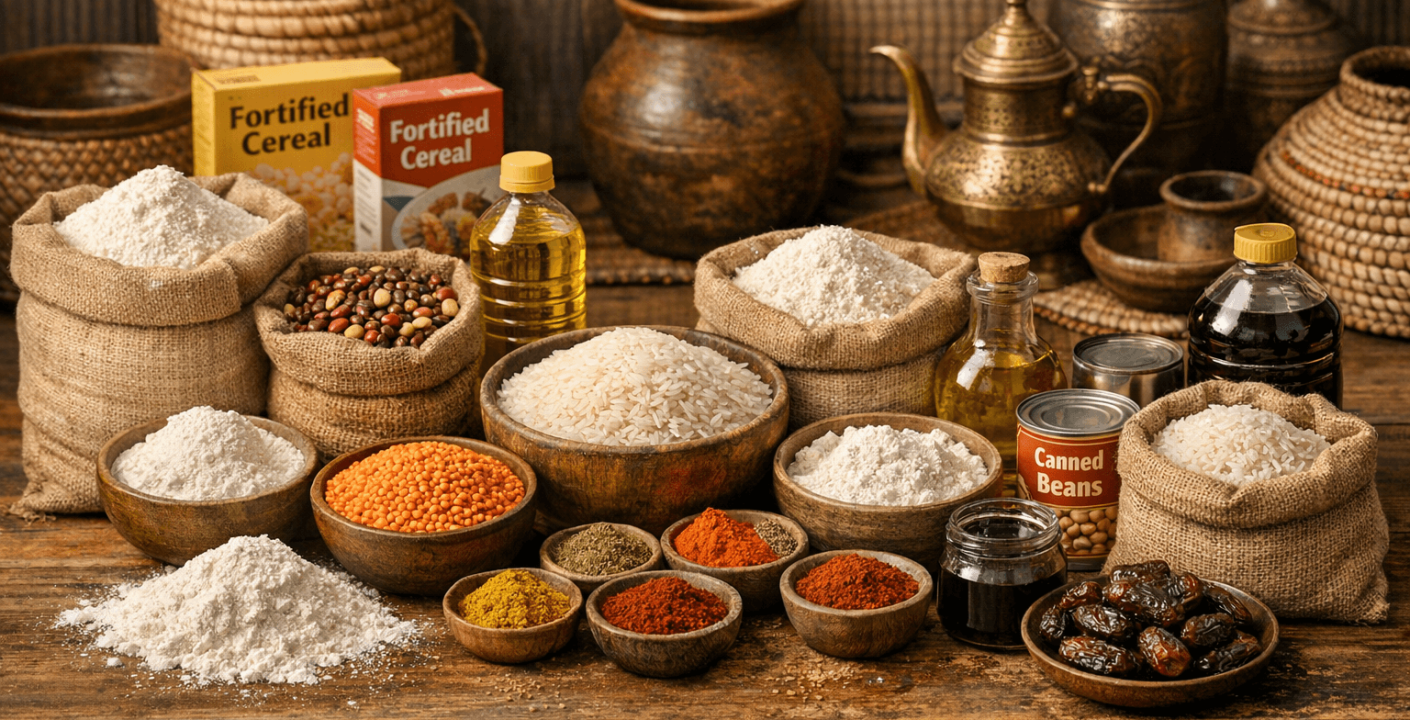
What a Typical Monthly Food Parcel Includes in Different Regions
World Appeal tailors its monthly food parcels to suit the needs of families in the various regions where we operate, recognising that staples and nutritional requirements differ significantly. In East Africa, for example, a typical parcel may include items such as maize flour, pulses, cooking oil, sugar, salt, and fortified cereals, providing a blend of carbohydrates, protein, and essential fats. In South Asia, parcels often contain rice, lentils, wheat flour, edible oil, and spices that align with local cooking customs. In the Middle East, parcels might focus on staples such as rice, canned beans, flour, date syrup, and cooking oil.
Each parcel is carefully balanced to meet basic caloric and nutritional needs for a family of five for approximately one month, taking into account local dietary habits and food preferences. We also consider micronutrient content to help maintain health, especially for children and vulnerable family members.
Why Food Parcel Costs Differ Between Countries
Costs for providing a food parcel of similar nutritional value vary widely between countries due to several factors. Supply chain complexities play a major role; in countries with well-developed markets and supply routes, prices for staples are generally lower. Conversely, in regions affected by conflict or political instability, disruptions can drive prices higher. Currency fluctuations can also impact costs — a £50 parcel in one country may have greater purchasing power than in another where inflation or devaluation is severe.
For instance, a £50 food parcel in Kenya can feed a family for a month, leveraging local bulk purchasing and relatively stable supply chains. Meanwhile, the same £50 covers closer to a week’s worth of food in Yemen, where ongoing conflict affects both access and price stability. These differences highlight why costs cannot be compared solely by headline figures but must be contextualised by local realities.
How World Appeal Adapts Parcels to Local Dietary Needs and Availability
Determining the contents of each food parcel involves extensive collaboration with local partners, nutritionists, and market experts. We start by assessing the most common foods and dietary practices in a given area, ensuring parcels are culturally appropriate and well-received by recipient families.
We also factor in availability and seasonality of food items. If a staple becomes scarce or prohibitively expensive, alternatives that offer equivalent nutrition are considered. This flexibility allows World Appeal to maintain the value of the parcel regardless of fluctuating market conditions. Nutritional adequacy remains a priority, ensuring families receive sufficient calories and nutrients.
Local expertise is invaluable in adapting parcels. Our partners provide insights into food preferences, typical household consumption patterns, and any dietary restrictions or special needs, helping to avoid waste and improve effectiveness.
The Real Costs Behind Reaching Families
Beyond the cost of food itself, delivering these parcels carries significant expenses. Transport to remote or conflict-affected regions often requires complex logistics, including multiple transfers, security arrangements, and sometimes airlifting or off-road travel. Warehousing costs are also considerable, as food must be stored safely until distribution.
Last-mile delivery—the most challenging stage—may involve small local vehicles, boats, or even foot transport to reach isolated communities. These complexities add to the overall cost, meaning that the price donors see is not just the cost of food but also the investment in reliable delivery.
In conflict zones, security risks can increase insurance and personnel costs, further raising total expenses. Despite these hurdles, World Appeal remains committed to transparency about where funds are spent, to maintain donor trust and ensure aid reaches those who need it most.